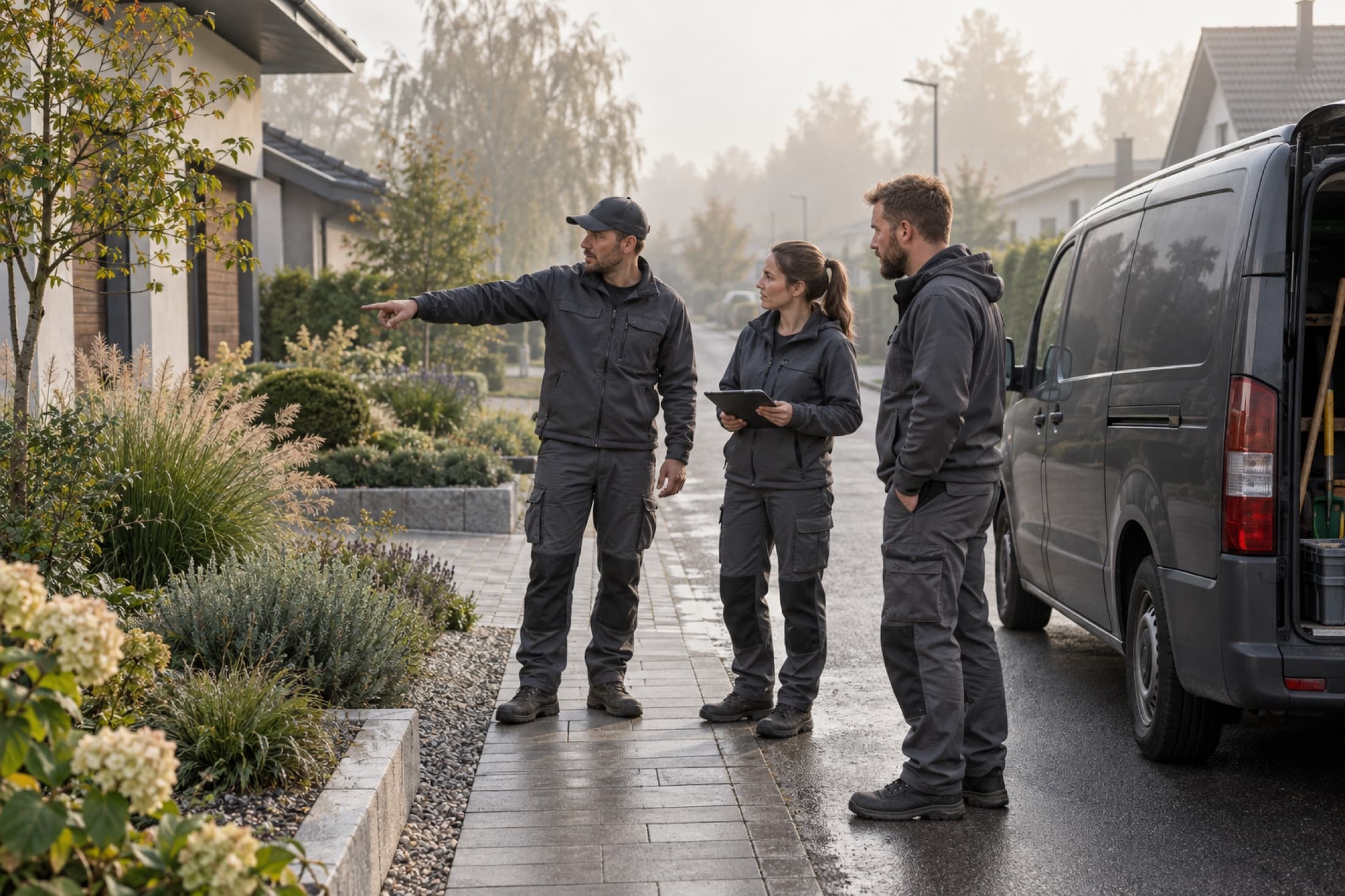
For a long time our site visits ended the same way: a handshake, “I will send the estimate this week”, and a drive home with numbers in my head. The estimate went out three days later, after the numbers had faded and two other visits had happened. The customer, meanwhile, had received the competitor’s quote on the day. We were not losing on price. We were losing on the three days.
For roofs, terraces and anything with a footprint, a satellite image gives you a ballpark before you leave. Draw the area, check it against the customer’s description, and you arrive with a number in mind and a shorter visit ahead. The ballpark is confirmed on site, never sent as is.
01
Measure, on the phone
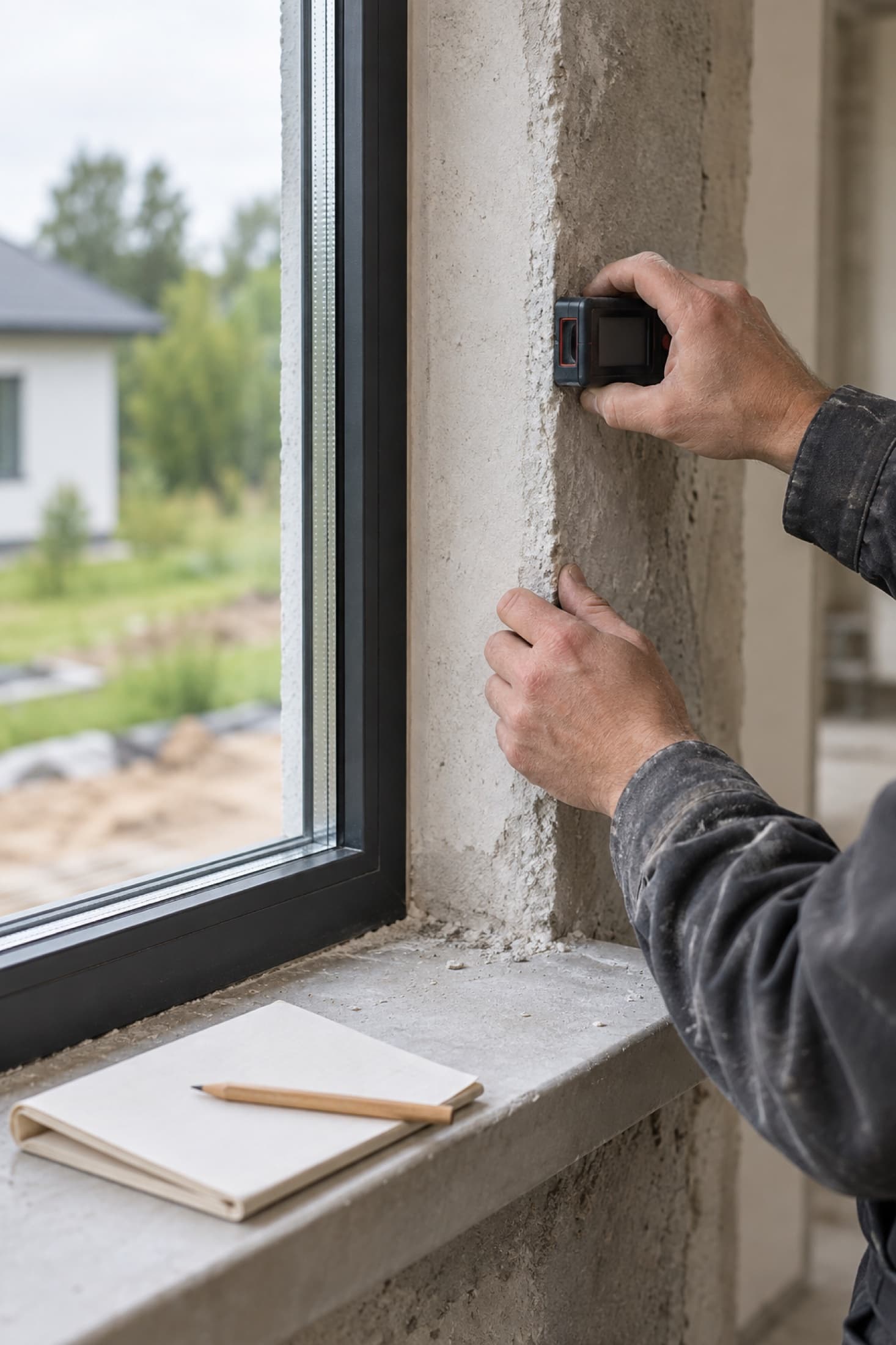
Lengths and areas typed straight into the estimate, or read from a Bluetooth laser. Every quantity stays linked to its line, so the roof area you measured is the roof area on the document.
02
Photograph what a crew will ask about
Access, the gate, where the materials will sit, the wall you will fix to. Photos attached to the measurement answer the questions the crew would otherwise ring you about on day one.
03
Find the two choices
Most jobs have two decisions the customer actually cares about: a louvred or a fixed pergola roof, decking grade, lighting. Do not decide for them. Put each as a priced option they tick on the page.
04
Say the payment plan out loud
“30 % when you accept, the rest after the handover act.” Saying it on site means it is not a surprise on the document, and it is written into the version they accept.
Before you drive off, look at the estimate exactly as the customer will see it: the scope, the options, one total and the payment plan. Costs and margin stay on your side. Three checks take a minute: is anything unmeasured, is the margin above your floor, is the validity date set. Then send. The customer gets a page and a PDF in your brand, from your own email or by SMS or WhatsApp, while the visit is still fresh.
They open the page, tick the options, see the total update, and accept with a 6-digit code sent to their email. Their name, the time and the exact version are recorded, and the signed PDF goes to both sides. No account, no app, no printing. If they want a change, it becomes version 2 and version 1 stays on record; you never argue later about which one was agreed.
Everything above is how the estimate works in the product: measured on the phone, from a laser or from the map; priced from your own book with assemblies; options the customer ticks; a preview of exactly what they will see; margin, VAT and the payment plan checked against your rules; one exact version sent as a page and a PDF. Today’s jobs and measurements stay available without signal, and the whole estimate works on a phone as narrow as 320 px.